


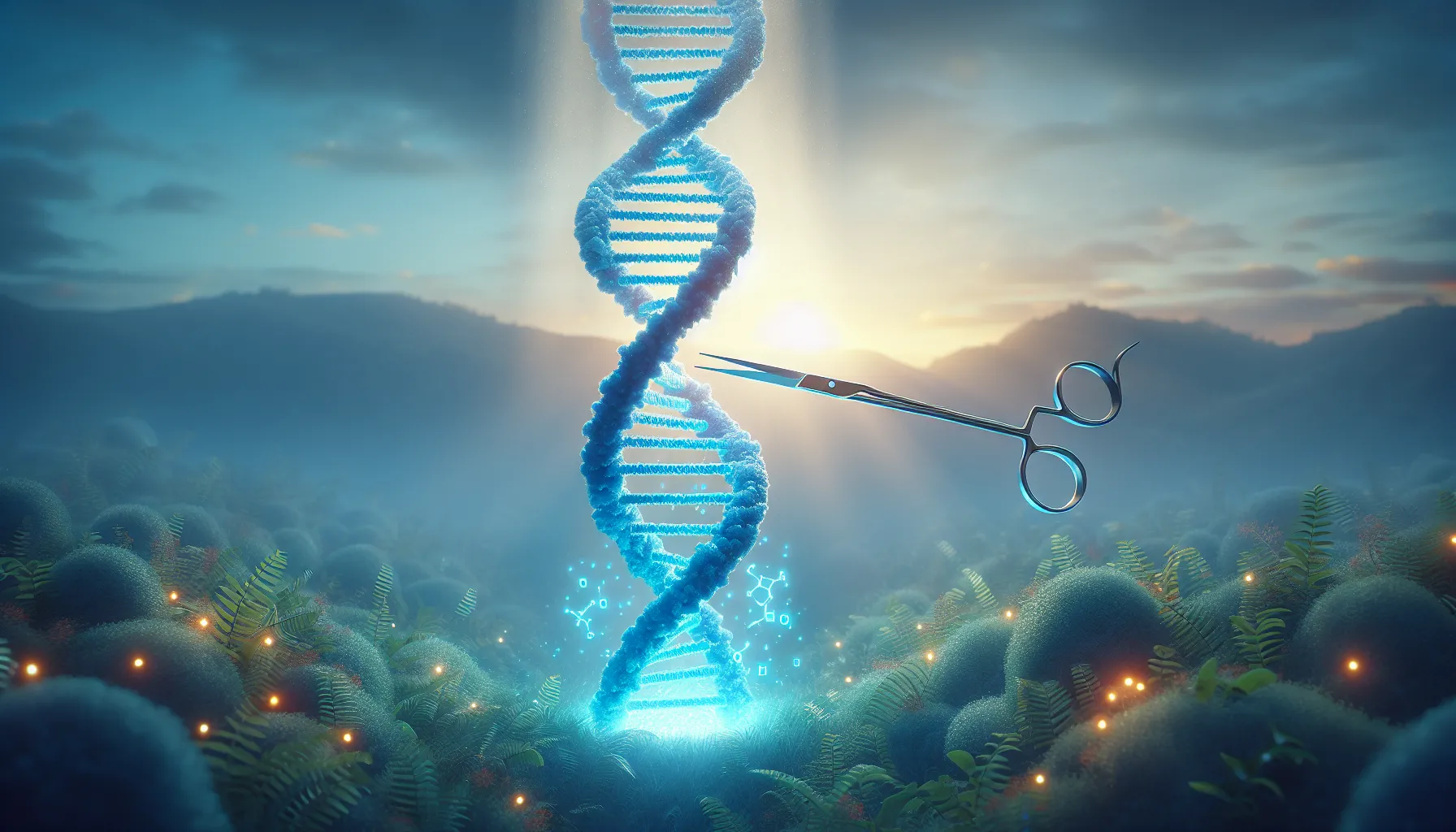
CRISPR technology has revolutionized the field of gene editing, offering unprecedented precision and flexibility in genetic manipulation. At its core, CRISPR—an acronym for Clustered Regularly Interspaced Short Palindromic Repeats—serves as a guiding star in the world of biotechnology. But how does it work, and why is it the talk of the scientific community?
Imagine CRISPR as a pair of molecular scissors, wielded with laser-like precision. This tool can cut through DNA strands, making it possible to modify specific genetic sequences with stunning accuracy. It’s akin to having a spell checker for the genome; errors can be corrected, and undesirable sequences can be snipped away.
The process begins with the CRISPR-associated protein 9, or Cas9, which functions like a highly specialized guide that zeroes in on a predetermined spot in the DNA. This targeted approach ensures that only the area needing modification is affected, minimizing the risk of unintended consequences.
CRISPR’s potential applications are as vast as the genetic code itself. From combating genetic diseases to creating drought-resistant crops, its impact could touch every corner of life sciences. For example, researchers are exploring its use to tackle devastating illnesses such as cystic fibrosis or sickle cell anemia, dreaming of a day when these conditions might be not just treatable, but entirely curable.</p
Advancements in treating genetic diseases

As scientists delve deeper into the mysteries of our DNA, the breakthroughs in gene editing using CRISPR technology promise to redefine the future of healthcare. Think of it as a game-changer, especially in the realm of genetic diseases—where the stakes are nothing short of life and death. With CRISPR, researchers are exploring unprecedented avenues for both treating and potentially curing some of these debilitating conditions.
Take sickle cell anemia, for instance. This genetic disease is caused by a single mutation in the hemoglobin gene. CRISPR offers a beacon of hope, as scientists are diligently working to correct this mutation at the DNA level. By doing so, healthy hemoglobin can be produced, alleviating the painful and life-threatening symptoms associated with the disorder. Clinical trials are underway, showcasing promising results that might soon translate into viable treatments for patients across the globe.
Similarly, cystic fibrosis—another genetic malady—stands to benefit immensely from CRISPR’s precision. Caused by mutations in the CFTR gene, this condition leads to severe respiratory and digestive issues. Here, CRISPR acts as a genomic maestro, methodically repairing defective genes within the cells, thereby restoring their normal function. The potential to diminish the disease’s impact is revolutionary, offering patients a chance at a vastly improved quality of life.
Beyond these, CRISPR’s impact extends to muscular dystrophy, Huntington’s disease, and more. Scientists are keen


